Celtic Holidays, Claddagh Rings, Irish Jewelry, St. Valentine's Day, Travel Ireland

What is Dublin’s Valentine’s Day Connection?

The city of Dublin serves as the capital of the Irish Republic and is located on the east coast of Ireland at the mouth of the River Liffey. Home to Dublin Castle built in the 13th century and the towering St. Patrick’s Cathedral was established in 1191. Both of these structures are considered historic buildings. St. Stephen’s Green and the enormous Phoenix Park, which is home to Dublin Zoo, are both examples of city parks in Dublin. The National Museum of Ireland is dedicated to examining the history and culture of Ireland. But did you know Dublin is also the home of St. Valentine’s relics where engaged couples venture to get their wedding bands, hopefully, Celtic wedding rings blessed? 

Our Lady of Mount Carmel Church towers over Dublin City Center. Thousands pass it regularly, yet we bet most don’t know the building’s renowned historical personality. You’d probably answer Saint Patrick, but it’s another Saint you generally don’t identify with within Ireland. It is Saint Valentino the patron saint of lovers

Where exactly in Dublin might one find the remains of Saint Valentine?

Whitefriar Street Church in Dublin is home to the relics of Saint Valentine, who was executed for his faith and later beheaded. Every year on February 14 and in the days and weeks preceding Valentine’s Day, tourists swarm to the shrine of St. Valentine which is located in the Carmelite Church on Whitefriar Street in Dublin.

A Look Back at the Origins of Valentine’s Day

Saint Valentine was a Roman priest who was executed in the year 270 A.D. for marrying couples against the wishes of the emperor, who had prohibited marriage in order to ensure that he had enough men to maintain his troops strong. Saint Valentine is known as the patron saint of love as well as beekeepers.

A couple of hundred years later, on February 14th, a feast day was established in honor of Saint Valentine by Pope Clement V. However, it wasn’t until much later that St. Valentine’s Day became so closely connected with romantic love.

On Valentine’s Day in the 18th century, our friends from North America promoted the practice of exchanging modest gifts, chocolates, and letters with one another. The adoption of this method did not occur in Ireland for another approximately hundred years.

Today, Valentine’s Day is celebrated as a secular holiday all throughout the world, and the custom of celebrating the day with greeting cards, presents, and other expressions of love is widespread.

But how did Ireland come to be identified with Saint Valentine, who is considered to be the patron saint of love?

The History of Saint Valentine’s Arrival in Dublin

In the year 1835, the Irish Carmelite priest known as Father John Spratt was given the opportunity to preach in Rome. Because the villagers were so impressed with his oratory, the Pope bestowed upon him a number of unusual symbols of gratitude, one of which was a collection of holy relics. After returning to Dublin, Father Spratt presented these presents to Our Lady of Mount Carmel on Whitefriar Street. The church is located in Dublin. There are even presents that have Saint Valentine’s own preserved heart!

Relics of this kind are revered by those who follow a religion. And despite the fact that a sacred heart would seem like an item that would be difficult to misplace, this relic was misplaced and wasn’t found again until the 1940s. The heart is currently kept in a prominent location in the Church, where it is guarded by a golden box and can be viewed by anybody who is interested.

Valentine’s Day Blessing of the Rings

And to this very day, on February 14 of each year, betrothed couples in love continue to visit the chapel in order to get a unique and special “blessing of the rings” for their wedding.

Irish Gifts for Valentine’s Day

Perhaps this year you won’t be able to make it to St. Valentine’s Basilica, but you can still celebrate the romantic holiday by giving your loved one a thoughtful Irish gift steeped in meaning and tradition instead. Even the most difficult-to-please Valentine’s heart may be won over by one of the many exquisitely designed pieces of romantic Irish jewelry that we have available in our large collection.

Why the Claddagh Ring makes a great Valentine’s Day Gift

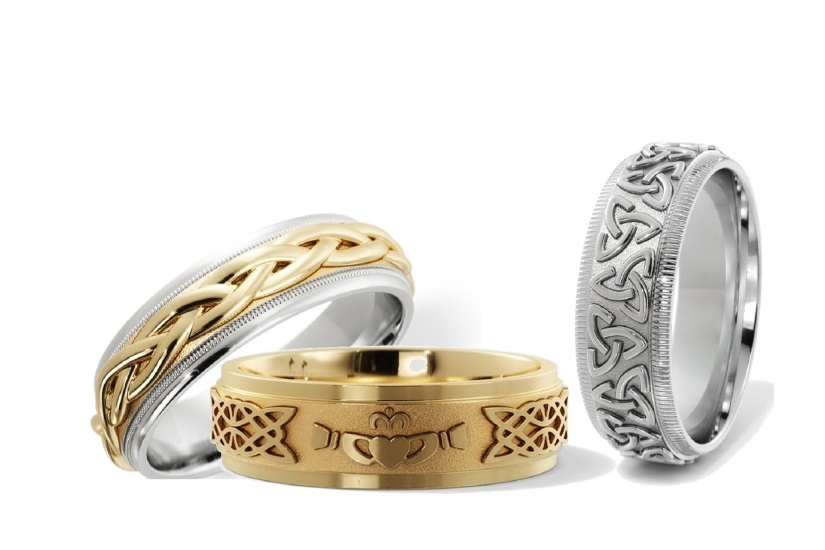
The Claddagh is a hallmark of Irish culture that may be found all over the world. The Claddagh ring is the ultimate symbol of enduring love and affection. One of the most popular choices for a promise ring is the Irish Claddagh, which was designed after the ancient Roman “Fede” and medieval Gimmel rings. Love is represented by the heart, friendship is represented by the hands, and loyalty is represented by the crown.

Celtic Holidays, Mother's Day

Tell Mom Happy Mother’s Day in Irish

Mother’s Day is a holiday that honors moms, whether they be biological or adoptive, as well as motherhood, maternal relationships, and the impact that mothers have on society. In various regions of the world, the holiday is observed on a different day, most frequently occurring in the months of March or May.

Mother’s Day in Ireland

In Ireland, Mother’s Day is traditionally celebrated on the fourth Sunday of Lent, which comes somewhere at the end of March. On Sunday, March 27, 2018, Mother’s Day will be celebrated in Ireland as well as in the United Kingdom. However, Mother’s Day is a widespread celebration that is observed on various dates across the world. This year, Canada, Australia, New Zealand, the United States of America, and many regions in Europe will honor mothers on the eighth of May.

How to celebrate Mother’s Day, a day honoring all mothers

The affection and thankfulness that we have for our moms and grandmothers is something that we experience on a daily basis. However, it should not come as a surprise that the practice of designating a certain day as a holiday has become widespread. On Mother’s Day, we are able to show our mothers our love and thanks by showering them with cards, flowers, and gifts such as motherhood jewelry. We can also let them know how much we appreciate everything that they do for us.

How do you wish a Happy Mother’s Day in the Irish language?

On this Mother’s Day, also known as Lá Fhéile an Mháthair, why not send your mother, or mum an Irish greetingLá na Máithreacha Sona duit, which may be pronounced “Law na Maw-her-aka Sun-a ditch,” translates to “Happy Mother’s Day.”

What is the word for mother in Celtic?

What is the Irish or Gaelic for Mother? The Irish or Gaelic for Mother is Máthair.

Mother’s Day in Ireland’s Religious Origins

In modern Ireland, Mother’s Day is celebrated as a day to honor all mothers. However, like many other Irish holidays, Mother’s Day has its roots in religious practice. People in Ireland and the United Kingdom used to go to their “mother” church on Mothering Sunday. This may be the church where they were baptized or the nearby cathedral, which served as the “mother church” for all of the parishes. Mothering Sunday was celebrated on the second Sunday in May. The employees celebrate the holiday with their families by traveling back to their hometowns. And as time went on and the holiday saw a renaissance in the 20th century, it evolved into a celebration of families and, in particular, mothers, giving rise to the current holiday that we know as Mother’s Day.

Mother’s Day Gifts

So as Mother’s Day approaches you’ve decided that in addition to your traditional Gaelic Mother’s Day greetings, you’d want to send your mother a unique Irish gift for Mothers this year. Our Family Birthstone NecklaceMother’s Claddagh, and Celtic Mother’s Knot collections are all customer favorites for Mother’s Day presents that she will remember forever. Each piece in these collections has a birthstonea mother’s Claddagh, or a Celtic mother’s knot.

Whether she is a new mother who is just learning the ropes of motherhood, someone who dotes on her children or grandchildren with pride, a cornerstone of the family, or a modern-day Queen, mothers are the true champions of the family.

Mother’s Day Gifts for a New Mother

Our Birthstone Claddagh jewelry is one of the most well-liked options for Mother’s Day presents among our customers. We believe that someone who is celebrating their first Mother’s Day would look lovely wearing our Celtic Mother’s Knot Necklace. The unbreakable bond that exists between a mother and her child, as well as their same religious beliefs and Celtic lineage, are all represented by the Celtic Mothers Knot, which features a Celtic trinity knot as its centerpiece.

For the Loving Mother or Grandmother

And for a loving mother or grandmother, our stunning Claddagh Family Birthstone Necklace may be customized with the birthstones of her children or grandkids to create a one-of-a-kind keepsake that is uniquely hers. It is a sign of undying love for one’s family as well as friendship and loyalty. This gorgeous design may accommodate anywhere from one to six birthstones. The Claddagh Family Birthstone Necklace that is shown has been customized with birthstones for the months of May, July, and September.

Dedicated to a Mother from her Child

The Mothers Claddagh is an understated stylized mother-child embrace representing the Madonna and child. A traditional Irish Claddagh, it symbolizes the relationship between a woman, her child, religion, and Irish history. Mothers love infinitely. She calmly watches her children pursue their ambitions. She watches them fly and catches them. She’s not flawless, but she’s always there. A loving mother. The Irish Jewelry Company exclusively sells Mothers Claddagh Jewelry.

Interesting Stories, Irish Jewelry, Irish Traditions, St. Valentine's Day

Amethyst: February Birthstone Meaning and History

Even though February is in the middle of winter and can be rather chilly, it is still the month to show love to one another. The birthstone for February is amethyst, which stands for the love and passion of the season. Amethyst, the February birthstone, is a type of quartz that is purple. It is claimed to keep one from becoming intoxicated and makes one more quick-witted in the workplace. The term amethyst originates from the Greek word “amethystos,” which translates to “not inebriated.” The amethyst gemstone is associated with healing and calmness.

The Amethyst: It’s Meaning as a Birthstone…

Amethyst is the birthstone for February, and it represents:

  • Knowledge and comprehension
  • Love, passion, and creative endeavors
  • Honed intellect

The Many Colors and Varieties of Amethyst

Gemstones made of amethyst are renowned for the stunning array of purple tones that they can display. The amethyst color pallet consists of a wide range of purple hues, from delicate lilacs to charming violets and even powerful royal purples. Citrine, the birthstone for November, is a member of the quartz family, whereas amethyst is a type of quartz. There is an interesting combination of amethyst and citrine that is called ametrine, and it may be found in nature. The hue of ametrine is a blending of the characteristic purple of amethyst with the golden sheen of citrine.

The Amethyst Throughout History

Gemstones have been held in high regard by illustrious communities and civilizations for a very long time, making them the subject of a great number of stories and myths. In the past, amethyst was mostly exported from Russia; however, nowadays, this gemstone is primarily extracted from mines in both South America and Africa.

So why is amethyst so special and how it became the February birthstone?

Amethyst was connected with Bacchus, the Roman deity of wine, by the Romans. However, it was said that Saint Valentine, the patron Saint of love whose Feast day is in February, wore an amethyst ring with a sculpted Cupid on it. The amethyst sits atop the Sovereign’s Sceptre with a Cross, which is part of England’s Crown Jewels collection. On the other hand, tarot cards and psychic readings frequently make use of amethyst.

Care of the Amethyst

Gemstones made of amethyst are prone to shattering when subjected to unexpected shifts in temperature, and they run the danger of losing their color when subjected to high temperatures. Since amethyst can lose its color if it is exposed to light, you should always keep your amethyst birthstone jewelry in a dark place while it is not being worn.

Amethysts, like the majority of precious stones, should be kept in a separate location so that they do not scrape each other or become scratched. Keep the components in a box with a lining or in a soft pouch. The best way to maintain the luster of your amethyst birthstone jewelry is to clean it with a gentle cleanser under warm running water.

Go Shopping for Some Amethyst Jewelry

Amethyst is the birthstone for February, so be sure to look for jewelry featuring this gem. This lovely, lilac gemstone sparkles with sterling silver and gold with a cool tone, and it is appropriate for royalty when set in settings that also contain accent stones all around it. We have an outstanding assortment of amethyst necklaces, bracelets, earrings, and rings that you can shop through to discover the perfect piece of amethyst jewelry to complement your unique sense of style.

Amethyst Necklaces

The radiant purple color of amethyst symbolizes a joyous celebration of love. Find the ideal amethyst birthstone necklace to wear around your neck and keep it near to your cherished memories.

Shop Amethyst Necklace>

Amethyst Earrings

Get swept away by the calming beauty of the month of February’s birthstone, the amethyst. Find amethyst earrings that sparkle in a variety of shapes, including amethyst studs, and amethyst drop earrings.

Shop Amethyst Earrings >

Amethyst Rings

The essence of carefree romance is captured in our Claddagh Birthstone Ring in sparkling CZ and sterling silver setting to represent February’s birthstone. Explore the dazzling amethyst birthstone rings that are available.

Shop Amethyst Birthstone Rings >

Celtic Holidays, Celtic Legends, Interesting Stories, Irish Legends, Irish Traditions, St. Valentine's Day

St. Brigid’s Day – A Celebration of a Celtic Goddess and Saint

St. Brigid’s Day, which marks the beginning of spring in Ireland according to Celtic tradition and occurs on February 1st, is quickly approaching. This year, the celebration of Saint Brigid’s Day will be elevated to the status of a nationally recognized bank holiday in Ireland to honor her. In Ireland, this national holiday marks the first time a woman has been honored with a public holiday in her own right. So who exactly was Saint Brigid? Was she a goddess from the ancient Celts or a holy person from the Christian religion?

A Holy Person in Christianity

St. Brigid of Kildare, according to legend, was born into servitude in Dundalk, Ireland, in the year 451 AD. She became a nun, an abbess, and the founder of various monasteries, the most notable of which was in Kildare, as a result of her assiduous efforts and laser-like focus.

A depiction of Saint Brigid offering protection to the monastery at Kells is considered to be one of the most significant parts of her legacy. She declined an arranged marriage so that she might devote her life to helping others, and as a result, she educated hundreds of women who would have been illiterate otherwise.

The St. Brigid’s Cross

There are several versions of the tale that surrounds the beautiful cross that bears her name. In the version that has become the most well-known, Brigid is said to have woven a cross out of rushes that were carpeting the floor at the bedside of a dying pagan chieftain, who, in some versions of the story, is her father. Her words comforted the dying man, and he was moved to be baptized before passing away in peace as St. Brigid explained the meaning of the cross to him.

St. Brigid’s Day – Lá Fhéile Bríde

On the first of February in the year AD 523, it is stated that Saint Brigid died away in a calm and serene manner. In the years that followed, Irish people have commemorated her and the ancient Imbolc who came before her by constructing and displaying rush crosses to bless their homes each year on this day. This practice dates back to when the festival was first observed. Currently, Saint Brigid is considered to be one of the three patron saints of Ireland, together with Saint Patrick and Saint Colmcille. Her feast day was effectively recognized as a national holiday in 2023 as a result of a campaign that occurred not long ago.

Brigid the Celtic Goddess

Brigid was an ancient Celtic goddess who was associated with poetry, healing, fertility, domestic animals, and the forge. She existed eons before the saint. Goddess Brigid, the strong and well-liked goddess, was the daughter of the Dagda, the monarch of the faraway Tuatha Dé Danann. She was revered by her people.

Imbolc and the Feast of Saint Brigid

The festival of Imbolc is also known as the Feast of Saint Brigid. Imbolc, which occurs around halfway between the winter solstice and the spring equinox, was traditionally celebrated by paying homage to Brigid with feasts and bonfires in the expectation that the upcoming growing season would be prosperous. In old Irish, the phrase “Imbolc” literally translates to “in the belly,” and the holiday’s history is documented in both mythology and medieval writings.

In the Celtic calendar, the feast day of Brigid signified the beginning of spring and the beginning of fresh life. Rush crosses of many shapes and sizes, most often with three arms, and miniature statues of Brigid, also known as Brídeóg, were crafted and hung in homes and stables in order to preserve the health of humans and animals.

The Cross of Saint Brigid is a symbol of Ireland.

The St. Brigid’s cross, along with the shamrock and the harp, is a magnificent emblem of Ireland that can trace its roots back to Celtic mythology. The harp is another sign of Ireland that has its origins in Celtic mythology. The cross is weaved from left to right, following the path of the sun, and is made from rushes or straw that was gathered from the earth on the evening of January 31, which is the eve of Saint Brigid’s Day. In the middle of it is a layered square, and spreading out from there are four arms, each of which is linked at the ends.

Saint Brigid’s Blessing

A traditional Irish blessing for your St. Brigid Cross …

“May the blessing of God and the Trinity be on this cross and where it rests and on everyone who looks at it.”

Where do you put a St.Brigid’s cross?

The Brigid’s Cross is used to safeguard a home and ward off dangers like hunger, fire, and evil.  They are usually hung by the entry doorway and in the rafters of homes to protect the house. It is also said to be a symbol of peace and friendliness, and in the past, it was used to protect animals and encourage cows to produce more milk when it was kept in cowsheds.

When do we make St Brigid’s cross?

On the evening of January 31, which is known as Saint Bridget’s Eve, people used to build a St. Bridget’s cross by weaving rushes or straw together. In order to pay homage to the saint and to ask for her protection over the household and its animals, the crosses were nailed to the walls of homes and, on occasion, of cowsheds and stables as well.

Making a Saint Brigid’s Cross

In Ireland, it is traditional to make a St. Bridget’s Cross. Rushes, also known as Juncus effusus, are used to construct the St. Bridget’s Cross, which is hung over the doors of homes in an effort to summon the assistance of St. Bridget in the prevention of sickness. St. Bridget’s Day is observed annually on February 1st, and the crosses are often crafted in conjunction with this holiday. Rushes were the typical material used in the construction of the St. Bridget’s Cross. These were retrieved from marshes and then hacked into pieces measuring between 8 and 12 inches in length. Rushes might be difficult to come by, but regular drinking straws made of paper or pipe cleaners can serve as an acceptable and even preferable alternative. You may secure the loose ends using rubber bands.

If You Can’t Get Rushes You Will Need

  • 9 paper drinking straws or pipe cleaners
  • 4 small rubber bands

How to Make Your Own Brigid’s Cross

  1. Hold one of the straws vertically. Fold a second straw in half as in the diagram.
  2. Place the first vertical straw in the center of the folded second straw.
  3. Hold the center overlap tightly between the thumb and forefinger.
  4. Turn the two straws held together 90 degrees counterclockwise so that the open ends of the second straw are projecting vertically upwards.
  5. Fold a third straw in half and over both parts of the second straw to lie horizontally from left to right against the first straw. Hold tight.
  6. Holding the center tightly, turn the three staws 90 degrees counterclockwise so that the open ends of the third staw are pointing upwards.
  7. Fold a new straw in half over and across all the staws pointing upwards.
  8. Repeat the process of rotating all the straws 90 degrees counterclockwise, adding a new folded straw each time until all nine straws have been used up to make the cross.
  9. Secure the arms of the cross with elastic bands. Trim the ends to make them all the same length. The St Bridget’s Cross is now ready to hang.

A cross of Saint Brigid necklace to be cherished for all of time.

If you are looking for a St. Brigid’s day gift, try our collection of Brigid’s Cross necklaces and St. Brigid Earrings, and Brigid’s Cross brooch to choose an item that you will always cherish and can wear throughout the year. St. Brigid’s Cross Jewelry is one of the most stunning and enchanted pieces of Irish religious jewelry. It is worn as a strong Irish religious symbol to protect the heart and the house.

Celtic Holidays, Celtic Legends, Claddagh Rings, Interesting Stories, Irish Traditions, St. Valentine's Day

Romantic Ireland and Valentine’s Day Celebrations

Valentine’s Day is a holiday that is observed as a time for love and affection in Ireland, as it is in a large number of other countries. Celebrations of Valentine’s Day all around the Emerald Isle include a variety of romantic traditions that provide an Irish flavor to the holiday. For example, the Claddagh ring tradition is practiced by many Irish couples when they exchange Claddagh rings as gifts with one another. Around the time of Valentine’s Day, love fills the air in Ireland. And there is no better way to enjoy the holiday than by spending time with the people you care about and partaking in some traditional romantic Irish activities.

Why is Valentine’s Day celebrated on February 14?

St. Valentine was the patron saint who inspired the name of this holiday. Many people think that the customs associated with Valentine’s Day may be traced back to the Roman festival of Lupercalia, which celebrated fertility. People also believe that Valentine’s Day commemorates the anniversary of Saint Valentine’s death, which occurred on February 14, 270 AD. Saint Valentine passed away on February 14.

Who was Saint Valentine?

In the first version of the story, which is the one that is most recognized and accepted, Saint Valentine worked as a priest in Rome during the third century. Valentine began performing clandestine weddings for couples who were courting after Emperor Claudius II outlawed marriage on the grounds that it was too distracting for his soldiers.

A second legend claims that Valentine was the first person to write a love letter signed “From your Valentine,” so initiating a practice that would go on to define romance for many years to come.

Even though there are a number of different stories about Saint Valentine, there are common threads that run through them, such as his unshakable belief in love, empathy, and passion.

The History of Valentine’s Day Celebrations

The history of Valentine’s Day is fraught with several myths and legends that contradict one another. Some people think that the day commemorates the death of Saint Valentine, while others believe that the Christian Church introduced the feast to replace the pagan Lupercalia celebration. Both of these theories are discussed in the following paragraphs.

Historically celebrated on the 15th of February, Lupercalia is a holiday dedicated to fertility that heralds the arrival of spring. It included a variety of rituals that were performed in honor of Rome’s progenitors, Romulus and Remus, as well as the Roman god of agriculture (Faunus).

In the year 498 A.D., Pope Gelasius issued an edict designating February 14 as Saint Valentine’s Day, so superseding the former pagan celebrations held by the Church on that day. Since that time, we have made a point of commemorating Valentine’s Day in a proper manner.

Ireland’s Connection to St. Valentine

Interestingly, Ireland has a bond with Saint Valentine that is unlike any other country in the world. In the year 1836, a distinguished Irish priest named Father John Spratt delivered a sermon in Rome that was met with universal acclaim and respect from members of the Christian world.

Many people expressed their appreciation for him by giving him a variety of presents, the most noteworthy of which came directly from Pope Gregory XVI himself. The gift consisted of a relic of Saint Valentine along with a note stating that the relic came from an authentic source.

He was given these magnificent holy treasures at the Carmelite Church in Dublin City, which is located on Whitefriar Street (which was once known as Aungier Street), and that is where they continue to be kept today.

The public is welcome to visit the shrine, which is known to possess relics of Saint Valentine. It creates an indelible connection between Ireland and the saint who is revered as the patron of lovers and the festival that is observed by millions.

Ireland and Valentine’s Day

The celebration of Valentine’s Day in Ireland has always been a wonderful match. The Irish people have come up with some very intriguing traditions in order to commemorate this romantic holiday over the years. It is a day packed with romance, from ladies writing love poetry to their spouses to proposing to one another. And let’s not forget the famous romantic, Irish tradition the Claddagh ringGiving a Claddagh ring on Valentine’s Day is without a doubt the most significant Irish custom, which is observed by many people across the world.

The Best Valentine’s Day Gift

The endearing Claddagh ring has gained popularity and recognition all over the world as a symbol of love. There are three distinct components that make up a Claddagh ring, and each one conveys a different message. A heart that has been crowned and is being grasped by two hands. In terms of symbolism, the heart is a representation of love, the crown is a symbol of devotion, and the hands are a symbol of friendship.


Next

 Romantic Ireland – Irish Leap Day Proposal Tradition

Related Posts

  1. Romantic Ireland – Irish Leap Day Proposal Tradition
  2. Romantic Ireland – Lisdoonvarna Irish Matchmaking Festival
  3. Choosing A Romantic Celtic Wedding Ring Design as a Couples Ring
  4. The Romantic Translation of Mo Anam Cara: Pronunciation and Meaning of Mo Anam Cara
  5. The Romantic Legend of the Luckenbooth
Celtic Holidays, Ireland, Irish Traditions, St. Valentine's Day

Romantic Ireland – Lisdoonvarna Matchmaking Festival

Who can forget that cute and kitschy rom-com from the 90s called The Matchmaker film starring Janeane Garofalo. Her character Marcy works as an assistant for Senator John McGlory, who is running for re-election but is experiencing some difficulties with his campaign. Marcy is dispatched to Ireland by Nick, McGlory’s chief of staff, in an effort to locate McGlory’s relatives or forebears in the hope of winning over Irish voters. When Marcy first arrives in the picturesque Irish town of Ballinagra, residents are getting ready for the annual Matchmaking Festival that is held there. As a young woman from the states who is attractive, well-dressed, and unattached, she quickly becomes the focus of interest for Dermot and Millie, both of whom are professional matchmakers, as well as for Sean, who tends bar.

Where exactly in Ireland does the festival of matching take place?

Lisdoonvarna is where the matchmaking festival takes place. The month of September sees the little town of Lisdoonvarna, located on the Wild Atlantic Way in Ireland, play host to the largest singles festival in all of Europe.

About the Irish Matchmaking Festival

More than a century ago, Lisdoonvarna, which is located in County Clare, became popular with tourists after a well-known surgeon from Limerick found that the mineral waters there had curative properties. All walks of life were represented among the tourists who came to soak in the mineral waters and consume them.

In September, once the crop was safely in their hands, single male farmers hurried to Lisdoonvarna in the hopes of finding a wife. This celebration, which is now known as the “Matchmaking Festival,” has become so well-attended that it now takes place over the course of five consecutive weekends!

The Matchmaking Festival is widely regarded as one of the most successful singles events on the planet. Since it began over 150 years ago, it has brought approximately 40,000 people to the town in the hopes of finding love. Willie Daly, a matchmaker who comes from a family that has been in the business for four generations, is presently running the show.

Are there matchmakers in Ireland?

The practice of arranging marriages is one of the oldest customs in Irish culture. It all started in Lisdoonvarna, when visiting gentry came to “take the waters” in this spa town and attempted to match their children with someone appropriate from the upper classes. This town is known as “the birthplace of arranged marriage.”

What is the common term for a matchmaker in Ireland?

The word “matchmaker” comes from the Irish word “Babhdóir.” The “Shrovetide” holiday, which corresponds to the “marrying season” in Ireland, was the time of year when the matchmaker had the most business.

Where exactly can one find the Matchmaker Bar in Ireland?

The Matchmaker Bar in Lisdoonvarna is an establishment that is quite unique. You can’t miss this pub with the cupid on the door. Willie Daly, a traditional Irish matchmaker who is in his third generation, is currently employed there. At The Matchmaker Bar, anyone looking for relationships may talk to him. Channel your inner Celtic archer with Celtic Arrow Jewelry. Our beautiful Celtic Arrow Jewelry Collection aims straight for the heart. It’s a fun and stylish token of Celtic love. As though being struck by Cupid’s arrow she’ll be smitten by the Celtic Arrow Jewelry Collection. 

Is There Still a Matchmaking Festival in Ireland?

Even if dancing, chatting, and drinking are all a bit of fun today, the primary allure of the event is still the chance to find a romantic partner. Willie Daly, a traditional matchmaker, and his mysterious “lucky book” of client profiles come into action at the Matchmaker Bar. Daly is a matchmaker who has been helping individuals find love for the past half a century. She is a third-generation matchmaker. It has been whispered that if you so much as touch this love book, you will fall in love within the next half a year.

In spite of the fact that the Lisdoonvarna Festival was first conceived as a method for bringing singles together in romantic relationships, the dynamic energy that is generated over the month-long celebrations is the primary reason why the event is still held.

Celtic Holidays, Interesting Stories, Irish Christmas, Irish Jewelry, Irish Traditions

Best Creative Irish Gifts for Christmas

THE PERFECT GIFTS FOR THE WOMEN IN YOUR LIFE

On Christmas morning, if you want to see a sparkle in her eye, consider giving her something that is glittering that you put beneath the tree. Whether you’re shopping for your wife, girlfriend, mother, daughter, or sister, or any other lady in your life, Irish jewelry makes a stunning Christmas present. The traditional motifs used in Celtic art are full of both symbolism and significance. They are not only stunning to look at, but they also convey something. What do you want to hear from her this time around?

Presents That Will Melt Her Heart

Regardless of whether this is your first Christmas as a couple or if you’ve been together for so many years that you’d have to stop and count them, jewelry makes for a beautiful and thoughtful gift. The following are some of our preferred expressions for the many types of connections.

Our Celtic Love Knot Diamond Bar Pendant is a slender beauty. This sparkling diamond pendant is trendy and makes the style grade with high marks. Created in sterling silver with a rose gold plated Celtic knot, this linear drop pendant is completely outlined with shimmering diamond accents that catch the eye. Simple and sophisticated, this pendant is brilliant Irish beauty.

Our Rose Gold Trinity Knot Necklace in beautiful 14k rose gold pays homage to the design’s ancient Celtic roots. Among other natural trios, the ancient Celts believed that the triquetra, or three-leaf design, represented the past, present, and future. The Holy Trinity is also represented by the Trinity Knot. Give her this lovely Rose Gold Trinity Knot Necklace as a gift she’ll treasure.

Our Claddagh Love Lock Necklace is a stunning Irish beauty. Perfect for that Irish lassie who holds the key to your Celtic heart. Crafted in sterling silver with rose gold plating, this meaningful Claddagh lock design features a cable chain necklace with a shamrock key charm. The Claddagh is a symbol of friendship, love, and loyalty. It’s a meaningful look she’ll treasure forever.

Traditional Irish Jewelry For Your Mother

Even if your mother may insist that the only thing she needs for Christmas is your love, you should still look for a present that conveys your feelings of affection for her.

The unshakable bond that exists between a mother and her child is symbolized by our Rose Gold & Silver Mothers Claddagh Necklace. There are no words to describe a mother’s devotion to her children. She has high hopes for her children and waits patiently to see them succeed. She is there to see their ascent and to catch them as they fall. Despite the fact that she’s not perfect, you can count on her to be there for you whenever you need her. The mother she is is a great woman who adores her kids. Give her a Rose Gold & Silver Mothers’ Claddagh Necklace as a token of your appreciation. The Rose Gold and Silver Mothers Claddagh Necklace’s Meaning Explained.

If you know a mother or a mother-to-be, these Celtic Mothers Knot Heart Earrings are a wonderful present. An understated artistic holy trinity with an embrace between a mother and child honors the Madonna and child. Set in a heart, the Celtic Mothers Knot Heart Earrings epitomize the unbreakable link between mother and child. We love these Celtic Mothers Knot Heart Earrings because they’re such a lovely representation of motherhood and family.

Give Your Daughter the Present of Her Ancestry

She will always be your little girl, and you know that she may discover both her beauty and her strength by honoring the place where she came from.

This precious Irish guardian angel pendant is a celebration of all things Irish. Your Irish Guardian Angel Pendant will always be watching over you when you look upon this heavenly angel. May this adorable Irish angel bring a bit of Irish luck to all who wear her and a touch of joy to their hearts!

Our little Irish Devil Shamrock Earrings are a whimsical celebration of the little bit of harmless mischievousness in every Irish woman. These nontraditional shamrocks are bright emerald green accented with little devil horns and curly pointed tails creating a wonderfully eye-catching design worthy enough to be called Irish. Whether she’s been naughty or nice you adore her and she’s sure to adore these brilliant Lil’ Irish Devil Earrings!

Stunning Presents for Sisters & Friends

Some of them are your sisters by birth, while others are members of your chosen family. Both are extremely valuable, and regardless of how close or far away they are, we have relied heavily on them throughout this year.

Our Celtic Sisters Knot bracelet is absolutely gorgeous. The Sisters Knot Celtic heart is a symbol of sisterhood and the strong, eternal bond we share with our sisters and friends. The intricate Celtic knot heart is an unbroken line symbolic of everlasting love and sisterhood. The stylized triquetra or triple spiral, woven within the Celtic knot heart symbolizes the three stages of woman. The three stages of woman are maid, mother and wise woman. Where are you and your sisters on the spiral of life? Celebrate the powerful, life long bond of friendship between women with our Sisters Knot bracelet.

Our Celtic Friendship Knot Earrings is a magnificent tribute to the spirit of true friendship. With its intertwined endless lines, the Celtic Friendship Knot represents the relentless bond between kindred souls. True friendship knows no barriers and no end. A spiritual bond forever growing separately but never apart.

It’s possible that the stories her grandparents told her about their experiences in Ireland inspired her love of the country, or maybe it was her discovery of Irish dancing. It’s possible that she had a life-changing experience in the Emerald Isle that led to her falling in love with the place. No matter how it began, if she has a deep affection for Ireland, she would be thrilled to see some Irish jewelry beneath the tree this year.

Interesting Stories, St. Valentine's Day

Grá Is The Irish Word For Love

Certain words such as grá, have been praised in music, poetry, and the art of ordinary speech in Ireland ever since the first lines were inscribed on Ogham stones. These words have been held in high regard ever since the beginning of Irish history.

The word “love” in Irish is grá. Grá is pronounced very similarly to the English word “graw.” The term grá derives from the Latin word “gratus.” Love, like the majority of the other words we have in English, has several interpretations available in Gaelic, and it is not an exception. We have discovered more than 20 different phrases in Gaelic that imply love. However, the most prevalent one is grá, and it may be used in a variety of contexts, ranging from an expression of love to a partner to an informal term of endearment when greeting a passerby. Grá is consequently used freely in Gaelic, and it’s typically spoken when checking in on someone by adopting a soothing tone as a means of verbally placing your arm around them to express your care. “Conas atá t, a ghrá? ” translates as, “how are you doing?” in English. love?” This is in contrast to the use of the term “love” in the English language, which is often limited to a close-knit group of family or friends in the context of a relatively quiet narrative. ow way. One possible explanation for the widespread use of grá among speakers of Gaelic is that there was a time when life in this region was extremely difficult for the vast majority of the population, and expressing love to one another was a meaningful way of showing solidarity through times of famine and coercion. As a result, the use of grá may have become widespread during this period.  Ireland has become a highly prosperous nation in the 21st century; however, we believe it is important to continue using the word grá freely in the Gaelic language, and we also think it is important to use love more frequently in the English language, in order to support the people around the country. 

What does the Irish word Gra mean?

The word “grá” means “love” in Irish.  it can be spelled grádh or ghrá well.

How do you pronounce Gra?

It is pronounced “grah” or “graw” (it also rhymes with the English word “raw”).

5 Ways to Say ‘I Love You’ in Irish

  1. Is tú mo ghrá (pronounced Is too moh graw) – This translates as ‘you are my love’ Word for word, it is ‘are you my love,’ but it is not a question. Irish puts the verb first in the sentence.
  2. grá agam duit (pronounced taw graw agum dweet) – The exact meaning of this phrase is ‘I have love for you.’ Gra is the Irish word for love.
  3. Tá mo chroí istigh ionat (pronounced taw moh kree ish-tig un-at) – This very romantic phrase literally means ‘my heart is in you’.
  4. Is tú mo chuisle (pronounced is too moh coosh-lah) – Another anatomical phrase, this means ‘you are my pulse’. Fans of the film ‘Million Dollar Baby’ might remember the phrase ‘mo chuisle’ from the movie.
  5. Táim i ngrá leat (pronounced tame ee n-graw leat. Leat rhymes with eat) – This one means ‘I am in love with you.’

Many Ways to Show Love in Irish

Another Stunning Way to Say “I Love You” in Irish Love is indescribable; it cannot be put into words. Touching someone physically, giving them a present, or assisting them with a chore are all ways that we might convey how we are feeling.

Understanding your partner’s preferences is essential to making the appropriate move. For instance, if your beloved is interested in Ireland, giving them a present with an Irish theme is the ideal approach to demonstrate that you notice them and care about the things that interest them. Because the patterns on Irish jewelry are so symbolic, giving it as a present may be an excellent and original method to express one’s feelings of love for another person.

Celtic Holidays, Halloween, Interesting Stories, Ireland, Irish Legends, Irish Traditions

Celebrating the Autumn Equinox Called Mabon

The Celtic festival known as Mabon takes place on the Autumn Equinox. Mea’n Fo’mhair is the name that the Druids give to this festival, during which they pay homage to the Green Man, who is considered to be the God of the Forest, by pouring libations for the trees. At this time, it is permissible to make offerings of ciders and wines, as well as herbs and fertilizer. Mabon, like Ostara, is an equinox festival, but unlike Ostara, the emphasis of Mabon is on balance. This is because the vernal equinox is one of the few occasions throughout the year when genuine balance can be seen in nature. Day and night are on par with one another. At Mabon, the chopping down of John Barleycorn is symbolized by the use of three stalks of locally gathered barley that are knotted together with rafia and a little bit of red wool. The folk tale and song known as “The Ritual of John Barleycorn” is meant to symbolize the planting, growth, and final “sacrifice” or harvesting of corn. The story is told in the form of a ritual. Mabon is known as a period when mysteries may be revealed. It is appropriate to pay homage to the Spirit World at this time. It is a time that is considered to be a time of equilibrium, and it is during this time that we take a break, relax, and take pleasure in what we have produced as a result of our individual labors, whether those labors have been directed toward the care of our gardens, our families, or any projects that we have been working on.

After the toil and labor of harvesting, the festival of Mabon ushers in a period of leisure and relaxation. In terms of one’s life path, it is the season of reaping what one has sown; it is the time to look back at the goals and ambitions of Imbolc and Ostara and reflect on how those hopes and aspirations have come to fruition. As we get ready to start our descent, now is the time to wrap up any unfinished business, clean house, and let go of everything that is no longer desired or required so that we may make the most of the quiet and reflective season that winter brings. And now is the moment to sow the seeds of fresh thoughts and dreams, which will remain dormant but be nurtured in the darkness until the coming of spring.

About the Autumn Equinox also known as Mabon

How do you pronounce Mabon?

The word Mabon is pronounced MA-bun with the “a” like in cat. It is a modern word to describe the Fall Equinox

What is the Meaning of Mabon?

The name “Mabon” comes from the sun deity of the same name who was worshiped in the Celtic religion. Mabon, also known as the Fall or Autumn Equinox, is also known as the Festival of Dionysus, the Harvest of First Fruits, and the Wine Harvest.

What is the celebration of Mabon?

The Autumnal Equinox marks the beginning of Mabon, a pagan harvest festival that is held annually around September 21st and continues until September 24th. This celebration, which is also known as Harvest Home, takes place in the midst of the harvest season, at the point in time when the days and nights are of equal duration. Pagans and ancient Celts observed this day as a time to express gratitude to the natural world for a bountiful harvest and to pray to their deities and goddesses for the continuation of the harvest during the colder months.

What exactly is the story of John Barleycorn?

John Barleycorn is a figure that appears in English mythology. He is said to personify the harvest of barley that takes place in the fall. In addition to this, he is symbolic of the magnificent beers and whiskeys that can be produced from barley, as well as the benefits that these beverages have.

What is the term given by the Celts to the Autumn Equinox?

Mabon is the name of the Celtic festival that celebrates the autumn equinox and takes place when the summer heat gives way to the crisp air of autumn. This event is held every year as a part of the traditional Celtic festivals, which trace back to ancient times.

What is the Autumn Equinox?

The autumnal equinox, when the Sun travels south over the celestial equator, occurs on September 21 or September 23 in the Northern Hemisphere. As the Sun crosses the celestial equator heading northward on March 20 or 21, the Southern Hemisphere experiences the equinox. Peasants in Christianized parts of Europe observed the autumn equinox as the Feast of the Archangel Michael throughout the Middle Ages.

When Exactly does the Autumn Equinox take place?

What exactly is the equinox that occurs in autumn? The sun is aligned such that it shines squarely on the equator at the fall equinox, and this ensures that both the northern and southern hemispheres get an equal quantity of sunlight. At exactly 2:21 p.m. on Wednesday, the alignment will take place formally. Regardless of whether or not there are clouds in the sky, Austin will get around 12 hours and 8 minutes of daylight.

Mabon Celtic Mythology

In Celtic mythology, Mabon is the period when, according to folklore, the God of Light was vanquished by the God of Darkness, which resulted in the lengthening of the night. Mabon is the son of Modron, the Great Goddess of the Earth, according to Celtic tradition. After his birth, Mabon was abducted for three days, which caused light to go into hiding. In addition, Mabon represents the masculine character that is associated with the harvest.

Mabon Signs and Symbols

The symbols we identify with Thanksgiving are very similar to those associated with Mabon symbols.

  • Apples: The apple is used to represent the Fruit Harvest as a symbol. In a great number of spiritual practices, the apple plays a crucial role. It is a symbol of healing, rejuvenation, regeneration, and completeness in addition to representing life and immortality. It is said to restore youth, add years to your life, and make you more beautiful. The apple is known in Ogham as “Quert,” which is also the name of a character who exemplifies health and energy. The apple, which represents the origin of life, may be found in the center of the Ogham grove. The pagan belief is that the apple harbors a “secret.” If you cut an apple lengthwise, you will find that it has the shape of a pentagram and contains five seeds. It is a beloved representation of the Pagan religion. As a result, the five points also symbolize the cardinal directions of east, south, west, north, and inside in addition to the elements of earth, air, fire, and water, with spirit at the top of the list.
  • The Cornucopia: Mabon is traditionally represented by the cornucopia, also known as the Horn of Plenty. It is a magnificent sign of the prosperity that harvest brings, and it is a beautifully balanced symbol that has both masculine (phallic) and feminine elements (hollow and receptive).

Colors of Mabon:

The colors of autumn foliage are the ones most often associated with the Mabon Celebration, so this shouldn’t come as much of a surprise.

  • dark green
  • red
  • orange
  • yellow
  • brown
  • gold

The Autumn Equinox and Mabon is a time of celebration as well as leisure after the toil and labor of the harvest. In terms of one’s life path, it is the season of reaping what one has sown; it is the time to look back at the goals and ambitions of Imbolc and Ostara and reflect on how those hopes and aspirations have come to fruition. As we get ready to start our descent, now is the time to wrap up any unfinished business, clean house, and let go of everything that is no longer desired or required so that we may make the most of the quiet and reflective season that winter brings. And now is the moment to sow the seeds of fresh thoughts and dreams, which will remain dormant but be nurtured in the darkness until the coming of spring.

 What it Means to be Celtic

Related Posts

  1. Celtic Autumn Equinox
  2. The Halloween Samhain Bonfire in Ireland
  3. IRISH HALLOWEEN TRADITION – BARMBRACK
  4. Celtic Halloween Myths and Legends
  5. The Celtic Origins of Halloween and Halloween Traditions
Halloween, Irish Traditions

Origins of Samhain the True Story of Halloween

The idea of night and day was central to everyday existence in Celtic cultureBealtaine and Samhain were two of their most important holidays. Their year was split between a dark half and a light half, and the transition from one to the other was celebrated with festivities. Samhain is a term that is often translated to mean “summer’s end,” and it was certainly a festival that took place during the darker half of the year.

It was considered more important than Bealtaine (and another two lesser festivals known as Imbolc and Lughnasadh) because the dark half of the year was more dangerous and more likely to be sorrowful. A 24-hour festival was held from sunset on October 31st to sunset on November 1st to say goodbye to the light and welcome the dark.

The Celts also held the belief that during this time of twenty-four hours, the deceased were able to travel between the world of the living and the world of the dead. Because of this, it was very necessary to treat the dead with respect and refrain from doing anything that would offend them.

Samhain was a festival that was observed not just by Irish Celts but also by their equivalents in Scotland and Manx, as well as by numerous variants of the festival with subtle modifications in Wales and Brittany. It is mentioned in some of Ireland’s earliest written documents, which date back to the 10th century, although it had already been in existence for a significant amount of time before then.

According to the opinions of those knowledgeable in the subject, it most likely began while the Celts were still pastoral people. They would have spent the summer cultivating crops and raising animals, and the winter gathering food and going into hibernation. Their life would have revolved around the seasons.

It was a crucial time of year for a variety of reasons, including the fact that the end of October would have been the period when commerce and fighting would have paused until the weather improved again. The date was often selected for the holding of significant tribal meetings and was also used as a jumping-off point for the creation of myths and stories.

The Hill of Tara

Tiachtga and the Hill of Tara are two hills in the Boyne Valley that are especially linked with Samhain. Of the two, Tiachtga is considered to be the more significant hill. The Great Fire festival, which was held there, was by a significant margin the largest event of its kind in the surrounding region. When the massive fire at Tiachtga was finally set ablaze, it was an indication that everything was in order and that further flames could be constructed.

In addition, it signaled the beginning of the enormous feast. Nevertheless, Tara was thought to be noteworthy due to the fact that the Mound of Hostages, which was located towards the top of the hill, was aligned with the rising sun during that time of year.

Celebration of the Festival of the Dead

It was believed that the veil that separates the world of the living from the world of the dead was at its thinnest during the holiday of Samhain. This allowed otherworldly spirits, both good and bad, to move freely back and forth between the two worlds. Because of this, things were fairly difficult for the surviving Celts, as they wanted to both welcome back their loved ones and keep off the bad spirits, which was a challenge given the circumstances.

It was stated that the time from sunset to sunset was “between years,” which simply means that time did not pass during that period of time, making it possible for anything to take place. Around this period, the many different legendary beings and spirits from Irish mythology, such as the banshee, the pooka, and of course, the fairies, were all quite active.

According to urban legend, if a human apprehended a banshee at Samhain, they would be able to put an end to her suffering and ensure that she would never inflict it on another human again.

The homes of the fairies in the underworld as well as the fairies themselves were completely visible to humans, and humans were fully able to interact with them. However, if humans did anything that was considered offensive or disrespectful, or if they broke any rules, they would be cast into the “other” world and would never be allowed to return.

The walking dead also have the ability to converse with the living and to demand payment for obligations that had previously been owed. Burial grounds, as well as crossroads, bridges, and the borders of neighboring lands, served as portals for ghosts to go between dimensions as they passed through the area. Because of this, many individuals decided it was safer to remain indoors and face their fears than to go out into the world.

What exactly took place during the Samhain celebration?

It doesn’t seem like a very joyous holiday when you think about it, yet most of the Samhain events revolved around the fire and the dead. Every fire that was burning in people’s houses was extinguished, and a large bonfire was erected in the middle of each hamlet. It was believed that the fire has curative and protecting properties, and it served as the focal point of the celebration.

Afterward, everybody who want to carry this holiness into their own houses was required to start their fire using flames taken from the bonfire.

There were many other ceremonies that took place around the campfire, including the sacrifice of animals, music, and dancing.

According to some versions of the story, a purification ceremony consisted of individuals stepping in between two flames that had been constructed next to one other and guiding their animals through the process as well. Along with the skeletons of killed cattle, ‘wicker men’ were also thrown over the fire. Wicker men were composed of food, bones, or even animals (or maybe even people) enclosed in wicker cages.

A massive feast was another important component of the festivities, and it was held over the course of more than one day on either side of the actual day of the festival itself. It was a good chance to get rid of perishable items before the winter set in, and as it was often a time when large groups of people got together for big meetings, it made sense to host a feast regardless of the reason for coming together.

The rural Celts had a lot of work to do around the time of Samhain since they needed to bring their cows in from the pasture for the winter, decide which ones to the butcher for food, and get ready for the harvest. After all of that had been completed, it is safe to assume that all they want was a delicious lunch that was still warm.

All of the doorways to a house would have been left open so that the spirits may come and go as they pleased. A specific quantity of food and a seat at the table was reserved for any deceased family members who chose to come back to their homes for the celebration.

The food that was meant for the dead was not allowed to be touched by human hands between the hours of sunset and sunset because this was considered to be a terrible act of sacrilege and meant that the person who committed it would become a hungry spirit after they passed away and would never be allowed to participate in the Samhain celebration again.

The rituals and traditions of Samhain

There were also plenty of odd practices that were carried out throughout the time of Samhain. The Celts had an irrational dread of fairies, and since they were believed to be at their most powerful around Samhain, food offerings were often placed outside of people’s homes in the hope that the fairies would remain in a good mood. It was also standard practice for people to disguise themselves by wearing masks and switching up their wardrobes so that the fairies would have a difficult time distinguishing between individuals in the event that they chose to take any souls.

As a part of the festivities, the individuals in disguise would go from house to house singing in exchange for a small token of food; if the homeowner was not obliging, they threatened to cause all kinds of mischief in the vein of an evil spirit descending on the house. This sounds a little bit like trick or treating, doesn’t it?

In addition to hiding their identities with masks, pranksters would carry lanterns manufactured from vegetables such as turnips that had been hollowed out. These lanterns had two purposes: they provided light and offered safety (those evil spirits and fairies had no mercy). They would often carve monstrous faces onto their lanterns so that anyone walking by would think the lanterns belonged to demons.

Children and adults alike would participate in a variety of activities designed to keep the dead entertained. These activities would include rehashing the events of the previous year, with the hope that the dead would maintain an interest in the goings-on of the living, as well as incorporating a number of child’s games into the ritual practices themselves.

Additionally, obligations owed to both the living and the deceased were settled during the Samhain holiday. There was a general ceasefire observed, and during that time, conversations and amicable contests took place amongst tribes who would not have interacted with each other outside of the battlefield otherwise.

People from the communities in the area would remove some of the ashes that were left behind after the bonfires burned out because they believed that doing so would bring about a bountiful crop. The ashes did, in fact, make the soil better in spite of everything, so this was one notion that was proven correct each year.

How did the celebration of Samhain become Halloween?

Once Christianity was introduced to Ireland, traditional Celtic holidays such as Samhain and others were “Christianized.” Samhain, also known as the Festival of the Dead, was renamed the Festival of All Saints and Martyrs, also known as All Saints Day because the early Christians on the island were determined to do all in their power to eradicate pagan ceremonies and spread their religion all across the island.

When the Pope of the time moved it to November 1st, he did so in order to ‘incorporate’ the pagan feast, which had previously been celebrated in March. Even though people adopted the new holiday as their own, the traditional rituals and practices that were linked with Samhain continued to be practiced for many decades after the holiday had been replaced. There were even a few of them that survived all the way up to the current day!

Next

 A Guide To Fairies and Fairyland

Related Posts

  1. A Guide To Fairies and Fairyland
  2. The Celts – A Guide to Their Culture
  3. A Guide To Popular Halloween Traditional Customs
  4. Top 10 Scary Irish Mythological Creatures